Interior design trends shift faster than most homeowners expect. What felt fresh in 2024 already looks dated in some circles. The comparison between interior design trends from 2024 and 2025 reveals significant changes in color choices, materials, and design philosophy.
This year brings a noticeable move away from safe neutrals and toward bolder expressions. Sustainability has stopped being optional. Technology now blends into spaces rather than standing out. Understanding these shifts helps homeowners and designers make smarter choices that won’t feel outdated within months.
Here’s what’s actually changed, and what it means for anyone planning a redesign.
Table of Contents
ToggleKey Takeaways
- Interior design trends in 2025 favor bold, saturated colors like deep greens and burgundies over the safe neutrals that dominated 2024.
- Natural textures—raw plaster, limewash, and aged wood—are replacing polished, uniform surfaces as homeowners seek authenticity.
- Sustainability has shifted from a premium option to an expectation, with vintage furniture and local sourcing gaining mainstream appeal.
- Smart home technology now integrates invisibly into architecture and furniture rather than cluttering spaces with visible gadgets.
- The minimalism vs maximalism debate has evolved into hybrid approaches like ‘warm minimalism’ and ‘curated maximalism’ that prioritize personal expression.
- When choosing interior design trends, invest more in long-lasting pieces like sofas and dining tables while reserving trend-forward choices for accessories.
Major Shifts in Color Palettes and Materials
The biggest visual change in interior design trends involves color. In 2024, warm neutrals dominated, think beige, cream, and soft terracotta. These shades created calm, Instagram-ready spaces. They also started feeling repetitive.
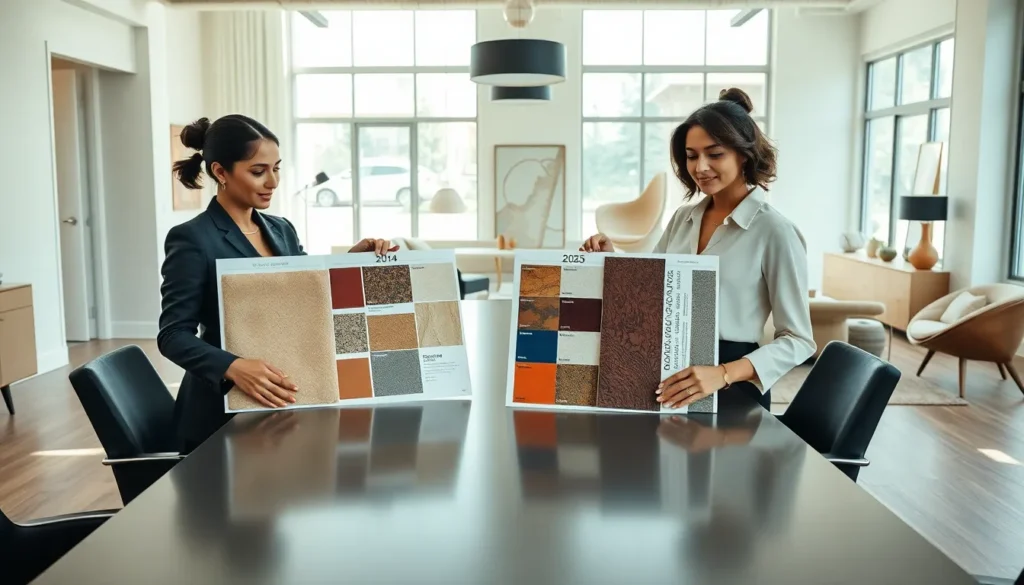
2025 pushes boundaries. Deep greens, rich burgundies, and saturated blues now appear in living rooms and bedrooms. Mocha Mousse, Pantone’s 2025 Color of the Year, signals a shift toward warmer browns with depth. Designers report clients asking for “personality” rather than “clean.”
Materials tell a similar story. Last year favored polished surfaces and refined finishes. This year leans into texture. Raw plaster walls, limewash paints, and natural stone with visible veining are replacing the smooth, uniform look. Bouclé fabric remains popular, but expect more leather, aged wood, and handmade ceramics.
Metals have shifted too. Brass and gold dominated 2024. Now, blackened steel, aged bronze, and matte finishes gain ground. The aesthetic feels less precious and more lived-in.
These interior design trends reflect a broader desire for authenticity. People want spaces that look touched by human hands, not generated by algorithms.
Minimalism vs Maximalism: The Ongoing Debate
This debate never really ends, it just evolves. In 2024, minimalism held strong. Clean lines, hidden storage, and “less is more” philosophy guided most mainstream design choices.
2025 complicates the picture. Pure minimalism feels cold to many homeowners now. Maximalism hasn’t taken over, but “warm minimalism” and “curated maximalism” have emerged as middle-ground options.
Warm minimalism keeps the clean bones but adds layers. A simple room might include a textured rug, sculptural lamp, and single piece of bold art. The space stays uncluttered but gains visual interest.
Curated maximalism takes the opposite approach. It embraces collections, patterns, and color, but with intention. Every object earns its place. This differs from the chaotic maximalism of earlier decades.
Interior design trends in 2025 favor personal expression over rigid rules. Someone might combine mid-century furniture with vintage finds and contemporary art. The mix matters more than the label.
Generational preferences play a role here. Younger homeowners often reject the sterile minimalism associated with certain tech-company aesthetics. They want spaces that reflect actual lives, not showroom floors.
Sustainable Design vs Traditional Approaches
Sustainability moved from trend to expectation. In 2024, eco-friendly options existed but often cost significantly more. Consumers had to choose between budget and principles.
2025 changes this equation. More manufacturers offer sustainable materials at competitive prices. Recycled content, low-VOC finishes, and responsibly sourced wood have become standard rather than premium.
Interior design trends now prioritize longevity over disposability. Fast-furniture retailers face criticism for pieces that break within years. Consumers increasingly invest in quality items meant to last decades.
Vintage and secondhand furniture has gained mainstream acceptance. What once seemed budget-conscious now reads as sophisticated. Estate sales, auction houses, and curated resale platforms compete with traditional retailers.
Traditional approaches haven’t disappeared. Some homeowners still prefer new construction materials and conventional furniture shopping. But, the burden of proof has shifted. Designers now explain why they’re choosing non-sustainable options rather than justifying sustainable ones.
Local sourcing also matters more. Shipping furniture across continents carries environmental costs that consumers now consider. Regional artisans and manufacturers benefit from this shift in interior design trends.
Technology Integration: Smart Homes vs Classic Aesthetics
Smart home technology created a design problem: visible gadgets disrupted interior aesthetics. Voice assistants, charging stations, and smart displays cluttered otherwise elegant spaces.
2025 interior design trends solve this through integration. Technology now hides within architecture and furniture. Wireless charging pads embed into countertops. Speakers disappear behind walls or inside artwork. Lighting controls blend into millwork.
The smart home vs classic aesthetics debate has found resolution through better design. Homeowners no longer choose between convenience and beauty.
Ambient technology, systems that respond without obvious interfaces, gains popularity. Sensors detect presence and adjust lighting, temperature, and sound without touchscreens or voice commands. The technology becomes invisible.
Some homeowners push back entirely. A small but vocal group embraces “digital minimalism” in their physical spaces. They remove screens from bedrooms, create phone-free zones, and prioritize analog experiences.
Interior design trends in 2025 accommodate both approaches. The flexibility exists to go fully automated or deliberately simple. Neither choice reads as outdated.
What matters is intentionality. Random technology scattered throughout a home feels dated. Thoughtfully integrated or purposefully absent technology feels current.
Choosing the Right Trend for Your Space
Not every interior design trend works for every home. Budget, architecture, and personal taste should guide decisions more than magazine spreads.
Start with what bothers you. Does your space feel cold? Warm minimalism and richer colors address that. Does it feel chaotic? Editing and better storage help more than following trends.
Consider longevity. Some 2025 interior design trends will last years. Deep, saturated colors and natural materials have historical precedent, they’ve cycled through popularity before. Highly specific trends (particular furniture silhouettes or extremely narrow color ranges) may date faster.
Test before committing. Paint samples look different on walls than in stores. Fabric swatches help evaluate texture choices. Many designers recommend living with samples for at least a week before finalizing decisions.
Mix eras intentionally. The most successful spaces in 2025 combine pieces from different decades. A vintage credenza pairs with contemporary seating. Antique frames hold modern art. This approach creates visual interest and reduces the risk of looking dated quickly.
Budget allocation matters too. Spend more on items you’ll keep longest, sofas, dining tables, quality rugs. Trend-forward pieces work better in lower-cost categories like accessories and accent pillows.