Small kitchen design has undergone a dramatic shift over the past decade. In 2015, the approach to compact cooking spaces moved beyond cramped compromises toward intentional, efficient layouts that maximize every square inch. Homeowners discovered that thoughtful color choices, strategic storage solutions, and smart appliance placement could transform a tight kitchen into a genuinely pleasant place to cook. The trends that emerged in 2015, minimalism, open shelving, and integrated storage, continue to inform how designers approach small kitchens today. Whether you’re renovating a galley kitchen in a city apartment or updating a cottage kitchen, understanding these 2015 design principles offers timeless solutions that prove space limitations don’t mean settling for less.
Table of Contents
ToggleKey Takeaways
- Small kitchen design in 2015 shifted from cramped compromises to intentional layouts that maximize space through minimalism, open shelving, and integrated storage solutions.
- Neutral color palettes—whites, warm grays, and soft creams—expand small spaces visually by reflecting light, while two-tone cabinetry adds interest without overwhelming compact kitchens.
- Strategic storage optimization, including ceiling-height cabinetry, pull-out spice racks, and appliance garages, transforms a small kitchen into a functional, spacious-feeling area.
- Lighting and reflective surfaces—recessed ceiling lights, under-cabinet LED strips, and mirrored tile accents—are critical tools for making small kitchens feel larger and more welcoming.
- Downsizing appliances to counter-depth refrigerators, 24-30 inch ranges, and compact 18-inch dishwashers frees up precious wall and counter space in small kitchen design.
- Open sightlines and minimal pattern choices preserve visual continuity, allowing the eye to travel uninterrupted and creating a sense of openness in limited square footage.
Why Small Kitchen Design Matters
A well-designed small kitchen isn’t just a luxury, it’s essential for functionality and livability. When a kitchen is poorly planned, even basic tasks like meal prep become frustrating. Inefficient layouts force you to waste steps, inadequate storage leads to countertop clutter, and poor lighting makes cooking feel like a chore.
In 2015, kitchen designers recognized that small spaces demand more intentionality, not less. The constraints of limited square footage actually drove innovation. Rather than viewing a 75-square-foot kitchen as a problem to overcome, designers began treating it as an opportunity to eliminate waste. This mindset shift, from “making do” to “optimizing”, fundamentally changed how small kitchens were conceived and executed.
For homeowners, the payoff is tangible. A thoughtfully designed small kitchen improves daily quality of life, increases home resale value, and makes cooking more enjoyable. The 2015 wave of small kitchen thinking proved that elegant simplicity, smart storage, and deliberate material choices could outperform poorly organized sprawling kitchens. That philosophy remains valid today.
Color Palettes & Materials That Define 2015 Small Kitchens
Popular Color Schemes
The 2015 small kitchen aesthetic favored restraint over statement. Neutral backgrounds, soft whites, warm grays, pale creams, and muted taupes, dominated because they visually expand tight spaces and provide calm, uncluttered backdrops.
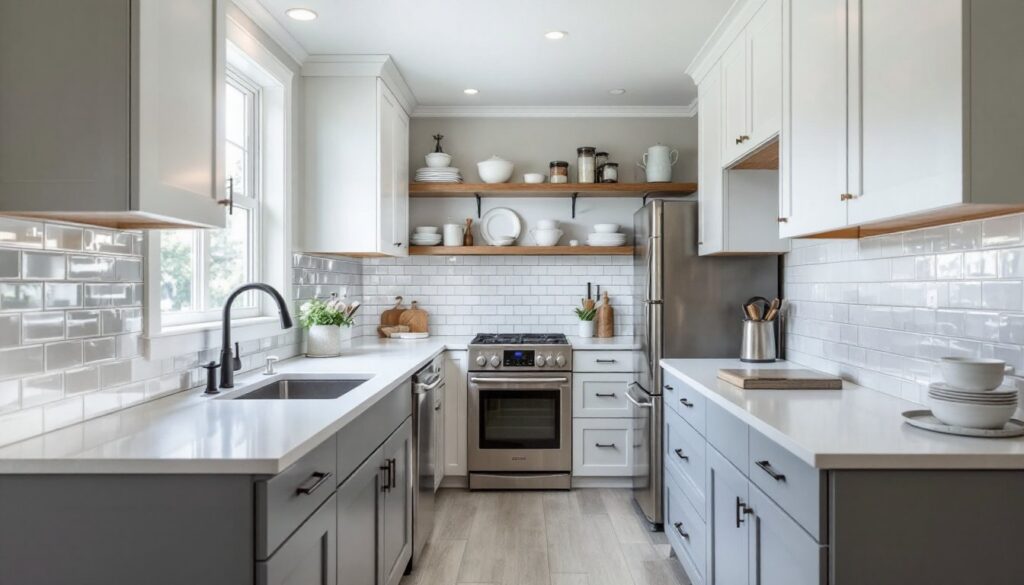
Whites and off-whites remain the safest choice for small kitchens because they reflect light and create an illusion of more floor space. Semi-gloss or satin finishes on cabinetry reflect additional light without the artificial shine of high-gloss, striking a balance between practical and refined. Warm grays became increasingly popular in 2015 as an alternative to stark whites, offering sophistication without coldness. Pale greens and soft blues appeared as accent colors, typically on a single wall, a few cabinet doors, or as tile backsplash details, adding personality without overwhelming the space.
Dark colors (navy, charcoal, deep green) were used sparingly: perhaps a single lower cabinet bank, a feature wall, or an island accent. The key was restraint, designers avoided painting all four walls a bold color in a small space, which would feel claustrophobic.
Two-tone cabinetry also gained traction in 2015. Pairing white upper cabinets with a deeper lower cabinet tone created visual interest while keeping the upper portion light and open-feeling. This technique is both aesthetic and practical: upper cabinets stay visually light, while darker lower cabinets hide wear and scuffs better.
Material Choices For Compact Spaces
Material selection in 2015 small kitchens prioritized durability, cleanability, and visual lightness. Laminate and thermofoil cabinet finishes dominated because they’re affordable, low-maintenance, and come in hundreds of colors and textures without the cost or upkeep of real wood or natural stone.
White subway tile backsplashes became ubiquitous, affordable, timeless, easy to clean, and visually airy. Glossy finishes reflect light and bounce it around the space, making small kitchens feel less confined. Stainless steel or matte finishes were chosen by those prioritizing a modern look, though matte requires more careful cleaning to avoid fingerprints.
Countertops leaned heavily toward quartz or engineered stone (Caesarstone, Silestone, Cambria). These materials offer the look of natural stone with superior durability, seamless installation, and easier maintenance than granite. Light colors, whites, pale grays, soft creams, remained preferred for their space-expanding qualities. Open shelving, when used, displayed curated dishware and accessories: a few white plates, glass jars with dry goods, maybe a cookbook or two. The visual weightlessness of open shelving made kitchens feel larger, though it required discipline to keep shelves uncluttered.
Flooring in 2015 small kitchens typically used large-format tiles, light wood tones, or polished concrete. Large tiles create fewer grout lines visually, making compact spaces feel continuous and less chopped up. Light finishes reflected light and kept the eye moving, while dark flooring tends to anchor and contain a small space visually.
Layout & Storage Solutions
The 2015 shift in small kitchen design centered on ruthless storage optimization. Designers recognized that a small kitchen with poor storage becomes a cramped nightmare, but a small kitchen with comprehensive, well-organized storage feels spacious and functional.
Galley kitchens, with appliances and cabinets running along two parallel walls, remained the gold standard for small spaces because they minimize wasted movement and maximize counter-to-storage ratio. One wall typically held the sink and one appliance: the opposite wall held the stove and remaining appliances or storage. This layout meant you could reach from sink to stove in two or three steps without the dead space that larger, more “open” plans create.
Islands were deliberately avoided in truly small kitchens, typically anything under 100 square feet, because an island consumed precious floor space without adequate clearance for passage. But, kitchens with 100–150 square feet sometimes incorporated a narrow rolling cart (18–24 inches wide) as a movable island: extra counter space and storage that could be positioned or rolled away as needed.
Storage innovation defined 2015 small kitchen thinking. Cabinetry extended to the ceiling, no wasted space above cabinet tops. Vertical pull-out spice racks, narrow deep drawers, and appliance garages (enclosed spaces for standing mixers and toasters, hidden behind cabinetry faces) became standard solutions. Deep drawers proved more accessible than traditional cabinet shelves: everything was visible and reachable without reaching to the back of a dark cabinet.
Open shelving replaced some upper cabinetry, but deliberately: typically only one or two shelves above the countertop, holding pretty everyday dishes and glassware. This created the illusion of openness without sacrificing actual storage (the remaining upper cabinets stayed closed and concealed). Floating shelves were fashionable but posed a practical challenge in small kitchens: they telegraphed clutter instantly. The philosophy was minimalist, fewer, more intentional objects displayed, everything else hidden.
Interior Design Trends Tips: Transform Your Space With Style often emphasize thoughtful storage as the foundation of livable small spaces, a principle that 2015 kitchens embodied.
Lighting & Visual Expansion Techniques
Lighting became a critical tool for expanding small kitchens visually. Poor lighting in a compact kitchen made it feel cramped and dingy: excellent lighting made the same space feel open and welcoming.
Recessed ceiling lights were standard, typically spaced on a grid pattern across the ceiling for even, shadow-free illumination. Under-cabinet lighting, LED strips beneath wall-mounted cabinets, illuminated the countertop and created a subtle glow that made the kitchen feel larger at night. Task lighting above the sink or stove (a small pendant or track light) provided focused light where precision was needed during food prep.
Mirror backsplashes or mirror accents were a 2015 trick for small kitchens: a mirrored tile backsplash, or even a few mirrored tiles mixed into a subway tile pattern, reflected light and made the space feel deeper. Glossy cabinet finishes served a similar purpose: they caught and bounced light rather than absorbing it (matte finishes, while on-trend, actually reduced the sense of spaciousness).
Visualsightlines mattered enormously. Open shelving worked because it preserved sightlines, your eye traveled across the kitchen uninterrupted, making the space feel larger. Busy tile patterns or heavily patterned wallpaper fragmented the visual space, so 2015 designers preferred solid or subtle patterns. A single accent wall (maybe a soft-colored subway tile, or a light patterned wallpaper) added interest without visual chaos.
Ceilings painted white or very light gray reflected light downward and made the room feel taller. Some designers used high-gloss ceiling paint for added reflectivity, though this was polarizing (some found it elegant, others clinical). The principle was consistent: light colors and reflective surfaces opened small spaces psychologically, even if square footage remained unchanged.
10 Small Kitchens We Love from 2015 showcases how professional designers executed these lighting and visual strategies, demonstrating the power of thoughtful illumination and sightline preservation.
Appliances & Fixtures For Efficient Small Kitchens
Appliance selection became an exercise in prioritization. A small kitchen demanded smaller appliances and fewer of them.
Refrigerators in small kitchens shrunk to 28–30 inches wide (instead of standard 36 inches), losing 2–4 cubic feet of capacity but freeing up wall space. Some homeowners chose undercounter refrigerator drawers or compact refrigerators and supplemented with a small pantry for dry goods. Counter-depth refrigerators (shallow, 24–25 inches deep instead of the standard 30+ inches) aligned flush with cabinetry, eliminating the appliance overhang and creating cleaner sightlines.
Ranges and cooktops rarely exceeded 30 inches wide. A 24-inch slide-in electric or gas range provided adequate cooking capacity for most households, and the reduced width freed up counter and storage space. Cooktop-only configurations (a cooktop without an oven) became viable for small kitchens, especially in homes where a separate wall oven elsewhere could handle baking. This eliminated the massive footprint of a full range.
Dishwashers in 2015 small kitchens sometimes disappeared entirely, hand-washing was a viable option in a 75-square-foot space with excellent organization. But, compact 18-inch dishwashers (versus standard 24-inch) provided automation without sacrificing storage, tucked neatly into a lower cabinet space.
Sinks were typically single-bowl (32–36 inches long, integrated into a compact under-counter configuration) rather than double-bowl, maximizing the width available for food prep. Undermount sinks created a continuous countertop line and were easier to clean than drop-in sinks.
Faucets transitioned to high-arc, single-handle designs: functional, uncluttered, and easier to clean in cramped quarters. Matte black, brushed nickel, or polished chrome finishes dominated: ornate Victorian or farmhouse fixtures felt out of place in minimalist 2015 small kitchens.
The broader principle: every appliance and fixture earned its space. Multi-use items (a cooktop that could also accommodate griddles, a sink with a colander insert) maximized versatility. Appliances with visible controls and sleek profiles fit the aesthetic: ornate, fussy details didn’t. Homedit – Home Design features countless small kitchen solutions that exemplify this pragmatic approach to appliance and fixture selection.