Kitchen design is evolving fast in 2026, and the shift is toward spaces that work harder while feeling intentional and honest. Forget the overstuffed, picture-perfect kitchens of years past. Today’s homeowners are building kitchens that blend function with warmth, spaces where minimalist aesthetics meet real-world family living. Whether you’re planning a full remodel or tweaking your current layout, understanding the top kitchen design trends happening now will help you make choices that feel current, last longer, and actually suit how you cook and gather. This guide walks you through the dominant design directions shaping kitchens today and explains the practical “why” behind each trend.
Table of Contents
ToggleKey Takeaways
- Top kitchen design in 2026 prioritizes functional minimalism and intentional spaces that balance aesthetics with real-world family living over picture-perfect showroom looks.
- Modern island-centric kitchens serve as social hubs combining prep work, storage, and seating in one functional zone, with proper spacing (36″ deep by 48–60″ long minimum) and layered materials to avoid an industrial feel.
- Smart storage solutions like pull-out shelves, lazy Susans, and drawer dividers maximize every inch of cabinetry and can be retrofitted into existing kitchens as low-cost weekend projects.
- Warm, earthy color palettes with natural wood accents and large-format matte tiles are replacing cold whites and intricate patterns, creating kitchens that feel timeless rather than trendy.
- Layered lighting using pendant lights (24–30″ apart), under-cabinet LED strips, and dimmers with warm 2700K bulbs transforms kitchens by supporting both task work and ambient mood.
- Sustainable kitchen features—including ENERGY STAR appliances, water-efficient faucets (1.5–2 GPM), induction cooktops, and FSC-certified cabinetry—reduce operating costs and environmental impact while offering long-term savings through utility rebates.
Modern Minimalist Kitchens
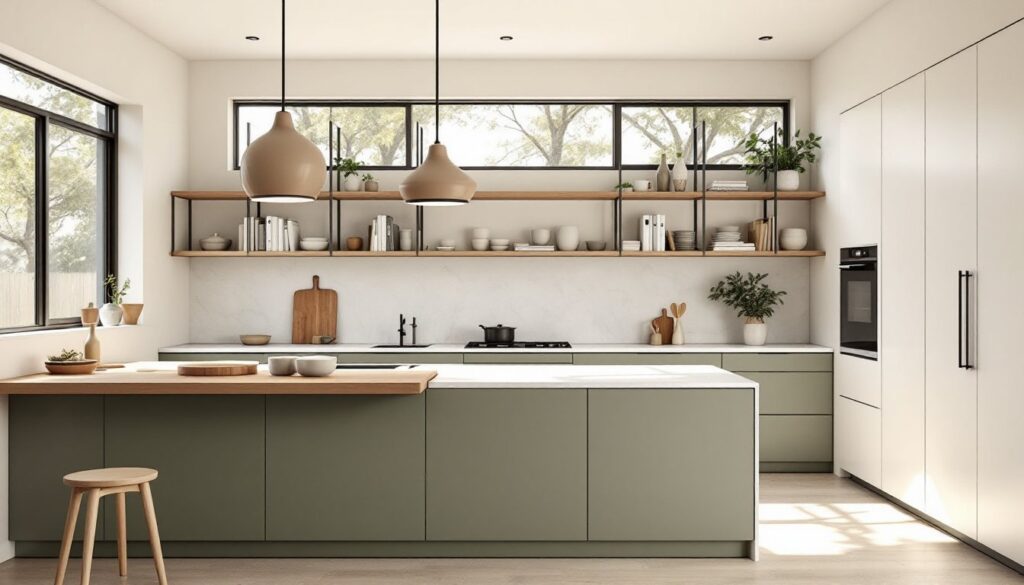
Minimalism in kitchens isn’t about barren counters or a showroom feel, it’s about intentional design and eliminating visual noise. The core appeal is clear: fewer distractions make the space feel larger and easier to navigate. A true minimalist kitchen strips out ornamental moldings, excess hardware, and clutter-prone open shelving in favor of clean, handleless cabinet fronts, integrated appliances, and designated storage for everything.
This trend relies on restraint with materials and color. Think flat-panel cabinetry in white, light gray, or warm wood tones paired with simple countertops (typically concrete, matte quartz, or butcher block). The “less is more” philosophy extends to countertop styling: a single cutting board, a few jars for staples, and a small utensil holder replace the typical scattered mixing bowls and gadgets. Backsplashes, when present, favor large-format tiles or matte finishes over busy patterns.
The practical advantage is maintenance and flow. Fewer surface objects mean faster cleaning and easier wiping down. Integrated appliances (flush-mount refrigerators, hidden dishwashers, built-in microwaves) maintain sight lines and reduce visual clutter. If you’re drawn to this direction, expect cabinet costs to run higher for quality handleless doors and custom storage, but payoff comes in durability and timeless appeal.
Open Layout and Island Living
Open kitchens continue to dominate, and the 2026 evolution centers on island-centric design where the island becomes the true social hub of the kitchen rather than just counter space. Unlike the kitchen trapped behind walls of the 1990s, today’s island kitchens blend food prep, seating, storage, and gathering in one functional zone. A well-designed island typically measures 36 inches deep by 48–60 inches long (minimum) to allow work space on one side and seating on the other without awkward traffic patterns.
Islands now often feature mixed materials: a butcher-block or marble work surface paired with open shelving on one end for displaying dishes or cookbooks, closed cabinetry below for pots and pans, and bar seating on the opposite side with backless or low-back stools for sightlines. This layered approach keeps the island functional without looking industrial. Lighting above the island (typically pendant lights spaced 24–30 inches apart) anchors the space and provides task lighting for prep work.
The catch: opening a kitchen requires careful planning around bearing walls and electrical/plumbing routing. Many homeowners need a structural engineer and a licensed contractor to remove walls safely, this isn’t a DIY structural project. The payoff is a more social, flexible kitchen that feels larger and works for modern family rhythms. Top Interior Design Trends highlight how open, connected spaces are redefining home layouts across all rooms.
Smart Storage and Organization Solutions
Storage is the unsung hero of kitchen satisfaction. The 2026 trend leans hard into smart organization: pull-out drawers, corner carousels, divider systems, and vertical storage that maximizes every inch without visible mess. Rather than deep, dark cabinets where items disappear, modern kitchens use graduated drawer depths, clear containers, and consistent labeling so everything has a home.
Pull-out sliding shelves are the game-changer here. Instead of reaching into the back of a 24-inch-deep cabinet, a simple slide-out tray brings items forward. These aren’t premium anymore, quality glides cost $50–150 per unit and retrofit into most cabinets. Lazy Susans (corner carousels) solve the notoriously wasted corner cabinet space, rotating to bring items into reach. Drawer dividers, whether custom wood or simple adjustable plastic, separate utensils, tools, and linens so drawers feel organized rather than chaotic.
Vertical space is also having a moment. Pot racks, wall-mounted magnetic strips for knives, and pegboard sections above or beside counters keep daily-use items visible and accessible without consuming cabinet space. If you’re working with existing cabinetry, retrofitting pull-out shelves and adding dividers is a weekend project requiring only basic tools and zero structural changes. Interior Design Trends Tools: offers guidance on planning and visualizing organizational layouts.
Color Palettes and Material Choices
Color in kitchens is shifting away from cold whites and sterile grays toward warmer, earthier palettes that feel livable. Warm whites (with slight cream or beige undertones), soft sage greens, and terracotta-inspired tones dominate 2026 kitchens. These hues pair beautifully with natural wood accents, walnut, oak, or reclaimed-style finishes, that bring organic warmth to cabinetry or open shelving.
Material choices reflect durability and sustainability. Quartz remains popular for countertops due to nonporous surfaces and minimal upkeep, but natural stone (granite, marble with sealant) is making a comeback for its uniqueness. Butcher block provides warmth and texture but requires regular oiling (monthly or quarterly depending on use). Concrete countertops, whether polished or with a matte finish, appeal to homeowners seeking an industrial-minimalist look: they’re sealed but still porous, so spills need prompt wiping.
Backsplash materials have also shifted. Instead of high-contrast or patterned tiles, the trend favors large-format tiles (12×24 inches or larger), matte finishes, and neutral colors. Penny tiles and intricate mosaics feel dated now. Stainless steel backsplashes are less common except in minimalist or professional-style kitchens. Real-world note: matte-finish tiles require more care to stay clean since fingerprints and water spots show more readily than glossy finishes. Professional kitchen design resources like Homedit showcase how warm palettes and natural materials create kitchens that age well and feel timeless rather than trendy.
Lighting as a Design Statement
Lighting in 2026 kitchens moves beyond simple task lighting into layered, intentional design that creates mood while supporting function. The approach uses three types: ambient (general overhead), task (over work zones), and accent (highlighting materials or architectural details). Most kitchens benefit from 2.5–3 watts per square foot of task lighting above countertops and islands.
Pendant lights over islands have become the signature statement piece. These range from simple hand-blown glass to sculptural ceramic or metal designs that reflect personality. Spacing matters: pendants should be 24–30 inches apart and 12–15 inches below the underside of upper cabinets to avoid shadows on work surfaces. For under-cabinet lighting, LED tape or linear strips (warm white, around 3000K color temperature) provide crisp task lighting without heat or bulk.
Recessed downlights often feel cold and institutional without proper tuning. Homeowners now pair them with dimmers and warm 2700K bulbs (soft white) to create flexibility between bright task lighting during cooking and warmer ambient light for dining. Track lighting offers adjustability without permanent installation and works well on walls or ceilings. The practical consideration: LED technology reduces heat and energy costs compared to older halogen or incandescent fixtures. Professional design sources detail how layered lighting transforms kitchens, resources on kitchen design ideas consistently emphasize lighting as the often-overlooked element that shapes how a kitchen feels.
Sustainable and Eco-Friendly Kitchen Features
Sustainability isn’t a nice-to-have anymore, it’s a core design driver for kitchens in 2026. Homeowners are making choices that reduce water, energy, and waste without sacrificing functionality or aesthetics. Water-efficient faucets with aerators that reduce flow to 1.5–2 gallons per minute (down from older 5+ GPM standards) are now standard rather than specialty items. Pull-down spray faucets with pause buttons or touchless activation cut waste during rinsing and washing.
Appliances are a significant investment but energy ratings tell the real story. ENERGY STAR-certified refrigerators, dishwashers, and cooking appliances use 10–50% less energy and water than non-certified models. A modern dishwasher uses about 3 gallons per cycle compared to 27 gallons hand-washing, so the appliance actually conserves water. Induction cooktops are gaining ground for efficiency, they heat cookware directly, losing less energy to ambient heat compared to gas or electric coil burners.
Material sourcing matters too. FSC-certified wood for cabinetry ensures responsible forestry. Low-VOC (volatile organic compound) paints and finishes improve indoor air quality. Recycled glass countertops and reclaimed wood accents reduce landfill impact while adding character. Waste management features like built-in composting drawers and dual-compartment recycling systems integrate sustainability into daily workflow rather than treating it as an afterthought. The honest truth: eco-friendly kitchen features often cost more upfront, but rebates (local utility programs frequently offer incentives for efficient appliances) and long-term energy savings often recoup costs within 5–10 years. Contemporary kitchen design inspiration demonstrates how sustainability integrates seamlessly with beautiful, modern design.
Conclusion
The kitchens taking shape in 2026 prioritize honest design over trends that age quickly. Minimalist aesthetics, open layouts anchored by functional islands, smart storage, warm earth-toned palettes, layered lighting, and sustainable materials all point toward spaces designed for living rather than impressing. Start with your priorities: Do you need better organization? Is your layout limiting family flow? Would a lighting upgrade transform the space? Small, deliberate changes, reorganizing cabinetry, adding pendant lights, or introducing warm-toned materials, can shift your kitchen toward current design without a full remodel.